
Performance Review
This guide will address the
process of performance review, which is one of the fundamental processes in the Human
Management of Organizations.
Our goal is for the reader to gain a deep and detailed understanding of the concepts and
elements involved in
performance review.

ÍNDICE
I
INTRODUCCIÓN

Performance review is a process that is carried out periodically in organizations (usually once
or twice a year) and
as its name indicates, it aims to evaluate the performance that employees of the company have
had in their positions.
The aspects to be evaluated of each employee are determined by the competencies and/or goals
(This process will be
explained in more detail later).
Generally, the performance review process is led by the Human Resources department; however, the
participation and
collaboration of the entire company is required to execute it successfully.
As mentioned above, for the performance review each employee has assigned certain aspects on
which he or she must be
evaluated. Based on these aspects, the evaluation questionnaire will be generated.
For example, for illustration purposes, let's assume that the position of Receptionist has only
two competencies assigned to it in its job profile. Which are Customer Focus and Responsibility.
Let's imagine that each of these competencies was evaluated with only one item:
- Customer Focus:
- He/She is kind to talk to the users.
- Responsibility:
- He/She fulfills his assigned obligations.
Let us also assume that it is decided to evaluate this position at the competence level only (not goals). Given the above, the receptionist's evaluation questionnaire will consist of two items:
- He/She is kind to talk to the users.
- He/She fulfills his assigned obligations.
Let's assume again that the people who will evaluate the receptionist are her boss, a colleague,
and she will perform
her self-evaluation. Each of the three, when entering to evaluate the receptionist, will see
something similar to this:
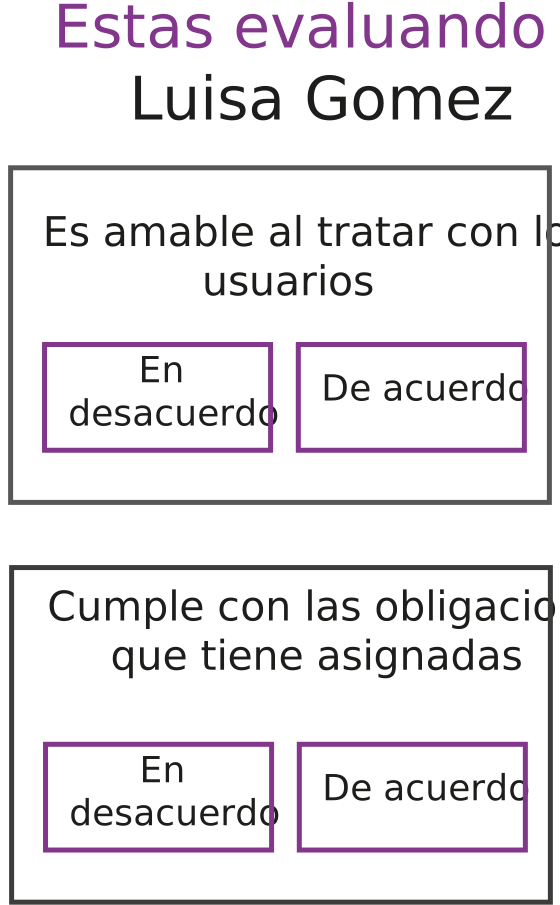 Each of the 3 will respond and based on the responses the receptionist's performance score will
be calculated.
Each of the 3 will respond and based on the responses the receptionist's performance score will
be calculated.
Note: The above example was made in an illustrative way, since generally each position
has more than 2 assigned competencies,
and each competency is measured with several items, not just one.
After having made this introduction with the aim of intuitively understanding how performance
evaluation works,Different aspects of this process will be discussed in more detail below.

II
TIPOS DE EVALUACIÓN DE DESEMPEÑO
The type of performance evaluation is generally referred to in degrees. Therefore, it is
common to hear about
evaluations 90 degrees (90°), 180 degrees (180°), 360 degrees (360°), etc.
The key concept to understand why these denominations is related to the quadrants that are
generated every 90 degrees:
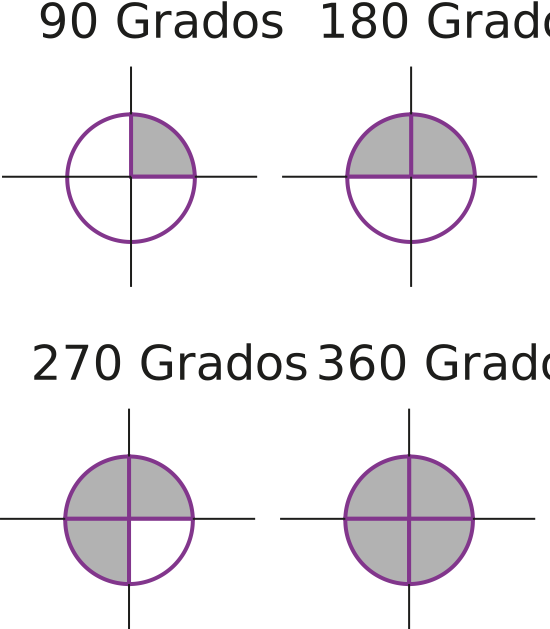 So: 90 degrees (90°) = 1 quadrant, 180 degrees (180°) = 2 quadrants, 270 degrees (270°) = 3
quadrants, 360 degrees (360°)
= 4 quadrants, etc.
So: 90 degrees (90°) = 1 quadrant, 180 degrees (180°) = 2 quadrants, 270 degrees (270°) = 3
quadrants, 360 degrees (360°)
= 4 quadrants, etc.
Taking into account the above, each quadrant is interpreted as a type of evaluator:
Evaluación de desempeño 90 grados (90°):Only the boss evaluates the employee, so there
is only one type of evaluator.
Evaluación de desempeño 180 grados (180°): The employee is evaluated by the boss,
but it also performs a self-evaluation. Therefore, there are two types of evaluators.
Evaluación de desempeño 270 grados (270°): The employee is evaluated by the immediate
boss,
performs self-evaluation and is additionally evaluated by its peers. Therefore, there are 3
types of evaluators.
Evaluación de desempeño 360 grados (360°):The employee is evaluated by the immediate
boss,
performs self-evaluation, is evaluated by peers and is additionally evaluated by subordinates
(employees of whom he/she
is
boss). Therefore, there are 4 types of evaluators.
Evaluación de desempeño 540 grados (540°): The employee is evaluated by the immediate
boss,
performs self-evaluation, is evaluated by peers, and is evaluated by subordinates (employees for
whom he/she is the
boss). Additionally, customer feedback (internal and/or external customers) is included in the
evaluation. Therefore,
there are 5/6 types of evaluators.
Evaluación de desempeño 720 grados (720°): This refers to two 360 degree evaluations.
A first 360-degree evaluation is carried out, with the results obtained, action plans are
generated, and after a period
of time another 360-degree evaluation is carried out, with the aim of comparing results.
Note: Although the above classification is the one generally used, and also the one
commonly found in the literature, it is
not uncommon to find organizations/individuals that define the grades of a performance
evaluation differently.
For example, referring to a 720° evaluation with the definition given here of a 540° one. Beyond
the differences in
terminology, what is important is that there is clarity regarding which actors we want to
participate in the process.
III
GENERACIÓN DE ÍTEMS A EVALUAR

One of the fundamental elements of performance review is the items that each employee has
assigned. For example, as
mentioned above, one of the items that the person with the receptionist position would have
assigned would be:
“He/She is kind to talk to the users.”
So here the question arises: How are these items generated for the hundreds or thousands of
workers in the company?
The items that each employee will have assigned arise from the competences attributed to their
position, therefore, derive from the
the organization's competency model.
3.1 Competency model
The competency model is a deep topic that could be addressed in another article, however, for what interests in this guide, it is enough to say that it provides important information regarding:
1. What are the competencies that govern the company?
The competency model determines the competencies that the company expects its employees to have,
as well as their definition.
Although there are different methodologies to define this, a common way to do this is to divide
them into two groups:
- Transversal competencies: These are competencies that apply to all employees of the company, regardless of their position. For example, if a transversal competence is Results orientation, it means that we expect all collaborators to have developed, to a greater or lesser extent, this competence.
- Specific competencies: These are competencies that apply to certain levels or types of position. For example, for employees with staff in charge, it makes sense to evaluate leadership competency; however, it would make no sense to do it with someone who does not handle personnel.
2. ¿What competencies are assigned to the different positions in the company?
The competencies model defines the competencies assigned to each position. For example:
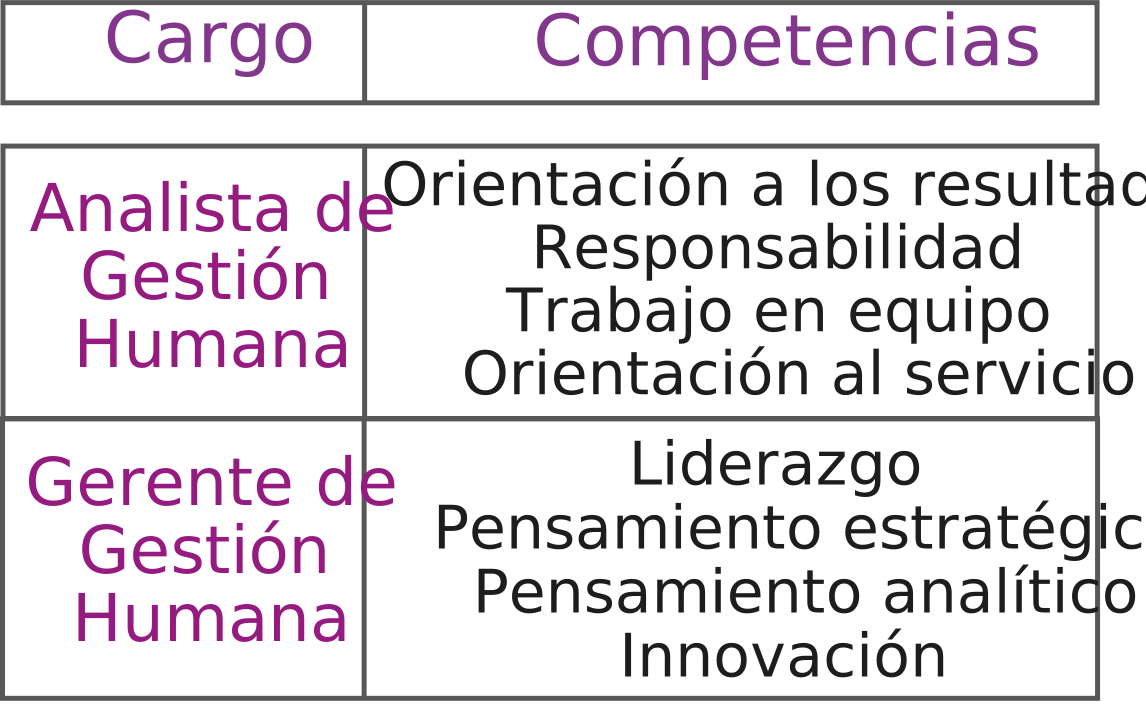 Points 1 and 2 serve as the basis for generating the items.
Note: In case the company does not have a competence model, the previous step to generate
the items of the performance review
is to define, at least, which are the competences that govern the company.
3.2 Methodology for item generation
Although there are different methodologies to generate the items, below we will mention the two most frequently used:
3.2.1 Item generation with focus on the levels of development of the competencies
Within the competency models of certain organizations, the following point is also addressed:
What level of competences development is
expected for each position?
Suppose that a certain organization decides that its competency model will include the
competency of
Customer focus. Taking this into account, an observation that may arise is that in
certain positions a greater development of this
competence is expected than in others.
For example, it is normal to expect such competition to be much more developed in a commercial
position than in an
administrative position. Therefore, it would be defined that while the administrative position
requires a Basic level of Customer focus
competence, in the commercial position an Advanced level is required.
This means that we will have the information, not only of what competencies are expected from a
certain position, but
also of the expected level of each of these competencies.
With the above information the items are generated taking into account:
1--What is the competence?
2--What are the indicators that can allow to evaluate this competence?
3--What are the behaviours associated with each level of this indicator?
The following is an example for better understanding:
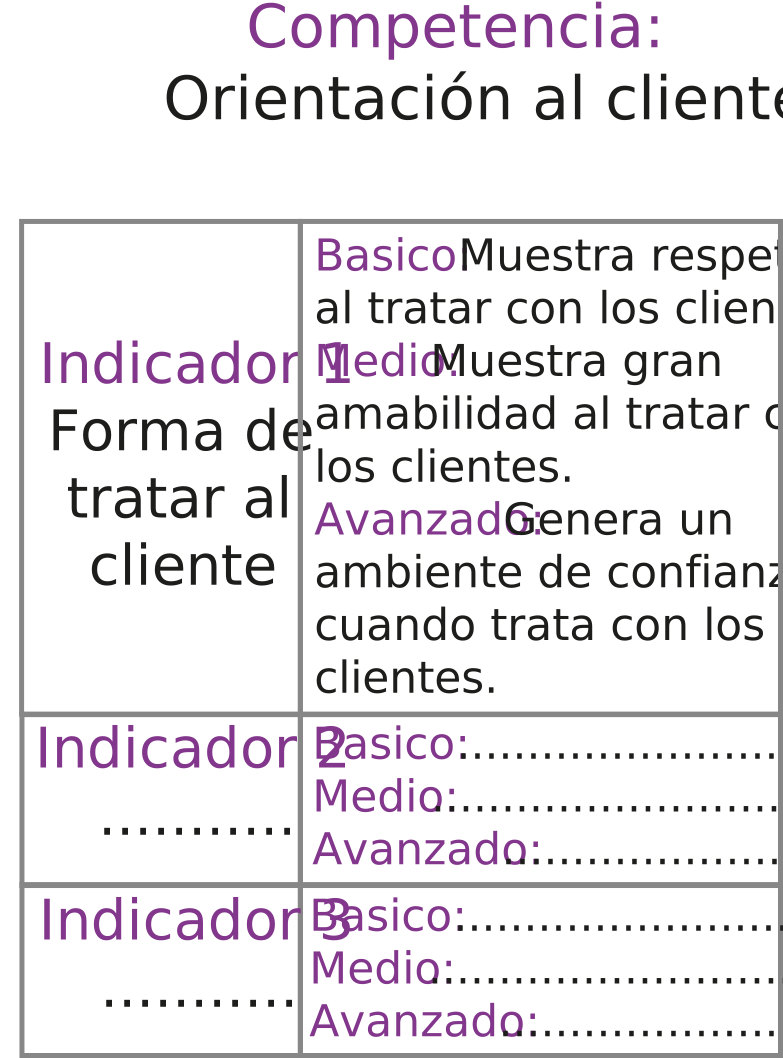 Thus, even though the administrative and commercial positions have the same assigned competence
(customer focus),
the items they will have will be different according to the level of competence assigned (basic,
medium or advanced).
Thus, even though the administrative and commercial positions have the same assigned competence
(customer focus),
the items they will have will be different according to the level of competence assigned (basic,
medium or advanced).
3.2.2 Item generation with a transversal focus
This methodology is based on constructing transversal items, that is, items that are
generalizable and do not require
discrimination based on levels. The items are generated taking into account:
1-- What is the competence?
2-- What are the indicators that can allow to evaluate this competence?
3-- What are the transversal behaviours associated with this indicator?
As can be seen, the first 2 points are the same in both methodologies, what varies is the last
step. Let's see an
example of item construction under this methodology:
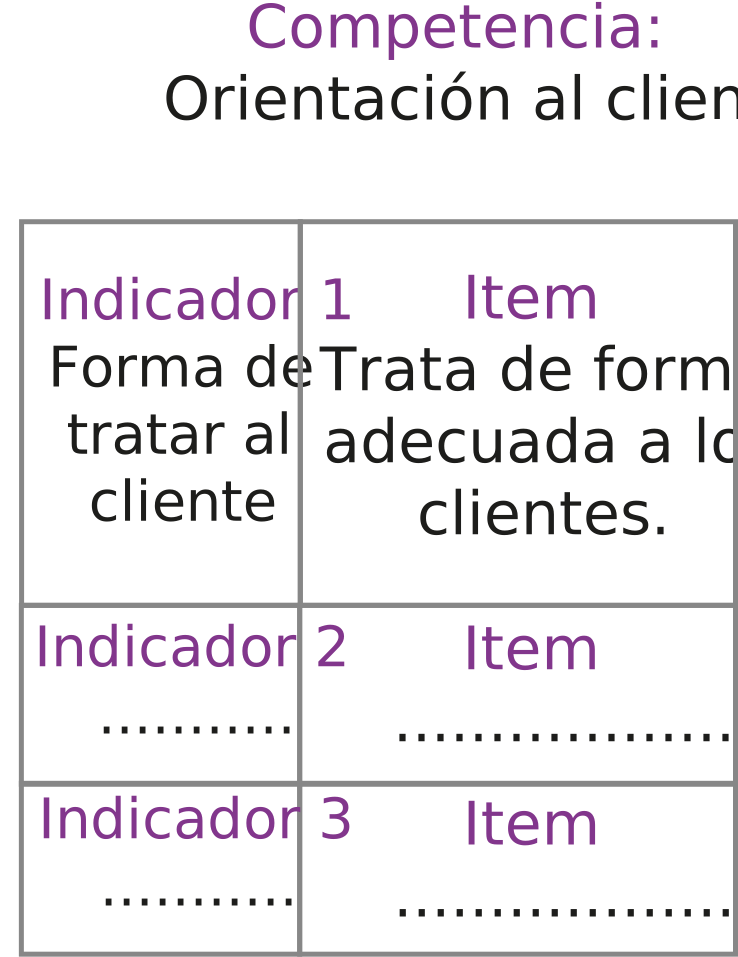 This item, as can be seen, is much more transversal and applies to any position that has contact
with customers.
This item, as can be seen, is much more transversal and applies to any position that has contact
with customers.
It is important to emphasize that the transversal items implicitly bring a leveling associated
to the context.
For example, given the item "He/She deals with the customers properly", the same criteria will
not be applied to a person in an administrative position who requires a basic level of this
competence, compared to a salesperson, who requires an advanced level.
Surely, in the first case, for the evaluators to give a high score to the evaluator it will be
enough for the person to
be respectful in his manner, however, in the case of the commercial position, much more will be
demanded than just this.
It is worth mentioning that, although transversal items are created, sometimes some adjustments
associated with levels
or types of charges must be made.
Suppose we are going to evaluate the Accountability dimension (competence), one of the
indicators will be punctuality
and the item will be "He/She is punctual in the time of arrival at work".
This is an item that is quite transversal, however, someone could argue that in certain
companies this item would not
apply, for example, to senior management positions, given that they are constantly out of the
office.
Although initially this may seem a drawback of this methodology, the way to handle it is
relatively simple. What would
have to be done is:
1 -- Evaluate if it is correct that the competence is associated with such positions. In
this case the question would be: Should senior management positions really have the
Accountability competence
associated with it? If the answer is No, the problem is solved by not measuring that competence
in those positions.
If it is determined that the position should have this associated competence:
2A) Keep the indicator, but change the item. That is, we will continue to measure
Accountability and we will continue to use the Punctuality indicator, however, we
will modify the item to fit these positions. For example, the item for these positions could be:
“He/She attends on time the meetings that have been cited”.
2B) The other option is simply to remove this indicator for certain positions. In this
example this would mean that senior management would be measured on the competency of
Accountability, however,
it would not include any items associated with the punctuality indicator.
Whichever option is chosen from the last two mentioned, it will mean that there are two versions
of a competence.
Regarding our example, there will be Accountability-1 (which will be associated with most
positions) and
Accountability-2 (which will be associated with senior management).
Regardless of the methodology used, the final result is that there will be competencies to be
evaluated and items to do
so.
The next step will be to assign this information to the different positions in the company. This
will be one of the topics to be addressed in the next chapter.

IV
MATRICES DE ASIGNACIÓN DE COMPETENCIAS Y EVALUADORES
In the previous chapter, we discussed the generation of the items to be used in the performance evaluation. To assign this information to the different positions, the competencies assignment matrix will be utilized.
4.1 Competencies assignment matrix
This matrix will map which competencies, and therefore which items, are assigned to the
different positions.
Usually this matrix is created in spreadsheet software (e.g. Excel) and will look like this if
an Item Generation
methodology was used with a focus on transversal items:
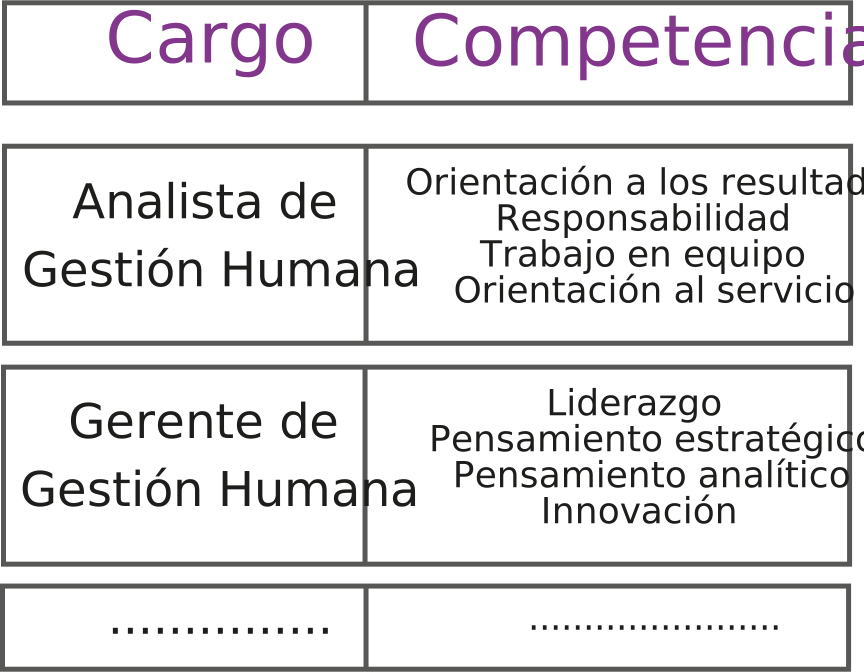 On the contrary, if an item generation methodology was used with a focus on the levels of
development of the
competencies; it will be similar, however, it will contain as additional information what is
related to the levels of competencies:
On the contrary, if an item generation methodology was used with a focus on the levels of
development of the
competencies; it will be similar, however, it will contain as additional information what is
related to the levels of competencies:
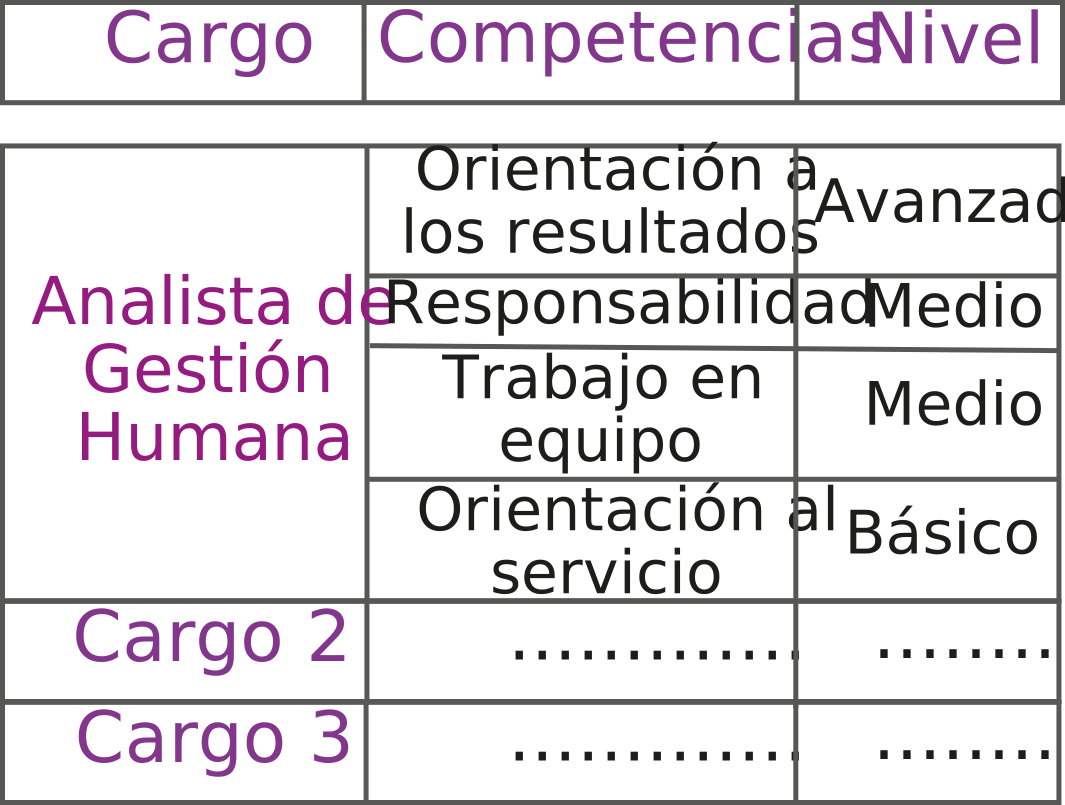 Regardless of the matrix used, in the end we will have as a result the mapping of the
competencies to be evaluated for
each position. That is to say, the items assigned to each position will have been defined.
Regardless of the matrix used, in the end we will have as a result the mapping of the
competencies to be evaluated for
each position. That is to say, the items assigned to each position will have been defined.
This matrix is indispensable in the performance evaluation process, as is the matrix of
evaluators.
4.2 matrix of evaluators
As the name implies, this matrix is used to determine the evaluators of each evaluated.
In other words:
Since each employee will be evaluated by a particular person, it is required to define who these
people will be. This
matrix looks like this:
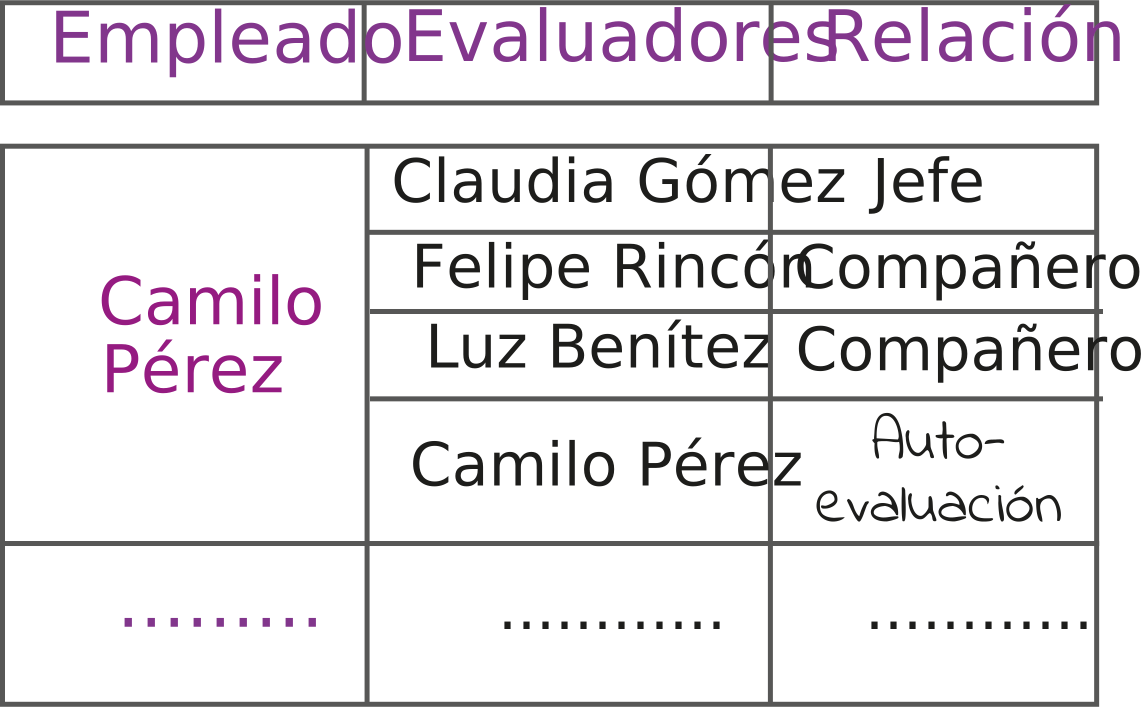 This matrix, like the previous one, is also indispensable for executing the performance
evaluation process, since
without it it will not be known who should evaluate whom.
This matrix, like the previous one, is also indispensable for executing the performance
evaluation process, since
without it it will not be known who should evaluate whom.
Until now, in the different chapters, we have seen key elements in the performance evaluation
process. Next, we will
cover how these elements fit into the step-by-step execution of a performance appraisal.
V
PASOS EN LA EJECUCIÓN DE UNA EVALUACIÓN DE DESEMPEÑO

Although there may be slight variations according to the particular context of each company, the steps that are generally executed in a performance evaluation are presented below:
I
Define the characteristics that the measurement will have. For example:
a. Type of evaluation (360 degrees, 270 degrees, 180 degrees, etc.)
b. Period of the year in which it will take place.
c. Objectives pursued with the measurement.
d. Etc.
II
Select the service provider: Given the complexity of executing a performance
measurement, it is normal to work with a supplier who accompanies the
whole process and provides the platform through which the performance evaluation will be
carried out.
III
Define the competencies that govern the company (in case this information is not
available).
IV
Define which competencies are associated with each position (in case this
information is not available).
V
Build the items alluding to each of the competencies that will be measured in the
evaluation.
VI
Based on the information from step III and IV, construct the competence assignment
matrix.
If competencies are to be measured by levels of development, the expected level of
development of competencies must be
defined for each position.
VII
Build the evaluator assignment matrix: For this step, especially if measurements
are made from 270 degrees upwards,
it is common that the help of the heads of each department is required.
This is because these evaluations involve the evaluator's peers, and if you do not know
in depth how each department
works, you may end up making wrong assignments.
For example, asking someone to evaluate a colleague in your area, when you don't know
what functions he or she performs,
or may not even know him or her.
VIII
Upload the information of the matrices to the platform where the measurement will
be made.
IX
Validate technological issues: Check with the technology department (IT) that
employees can correctly enter the
platform on which the performance evaluation will be performed.
X
Testing: Before running the measurement with the whole company, it is good to
test with a small group of people, in
order to validate that everything is working well at the platform level.
XI
Carry out communication campaign: In this, employees will be informed that in
The evaluation process will take place in the next few weeks, and some relevant
information will be provided at a
general level.
XII
Send to the employees the information for the entrance to the platform: In that
step, generally the employees will
be informed that the process of performance evaluation already began, they will be given
the indications for the
entrance to the platform and the deadline for the accomplishment of the same one will be
communicated.
XIII
During the time established for the measurement (generally 1 or 2 weeks), the
employees will enter the platform and
carry out the evaluation process.
It is important to constantly monitor how many employees have joined and how many have
not. This is in order to take
action in case there is a very high percentage of employees who have not made the
evaluation.
XIV
End the measurement when the deadline is reached.
XV
Receipt of results: After closing the measurement, the reports showing the
results obtained must be received. These
reports are generally divided into two types:
a. Each employee will receive a report with their individual performance results.
b. The company will receive a report with the general results of the performance
evaluation (results by city, department,
etc.).
XVI
Analysis of the results: The results obtained must be analyzed in depth by the
company, with the aim of detecting
the strengths and aspects to be improved in the performance of the employees.
XVII
Generation of action plans: Based on the results obtained and the analysis made
from them, the company must take the
necessary measures to generate improvements in the performance of its employees.
XVIII
Follow up on action plans: The company should constantly follow up on the action
plans generated in the previous
step, in order to evaluate their effectiveness, and if necessary, implement changes.